
Departmental or Strategic Organisation Development.
Introduction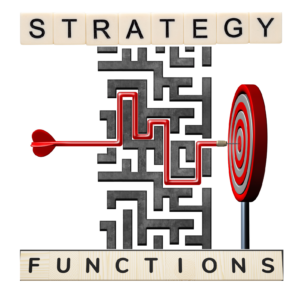
Organisation Development (OD) has, since its formalisation in the mid-twentieth century, carried a persistent ambiguity of scope. In its most familiar guise, OD is a practice — a set of planned, human-focused interventions (team-building, survey feedback, process consultation, conflict resolution) applied at the level of groups and individuals to improve organisational functioning.[1] This is OD as most HR practitioners encounter it: episodic, remedial, and bounded by the department or business unit in which it is commissioned. Call this Functional OD.
There is, however, a second and older reading of OD, closer to its founding intent, in which the object of development is the organisation as a whole system, and the outcome sought is not improved functioning within an existing strategic frame but a change to the frame itself — structure, strategy, culture, and market positioning treated as a single, interdependent unit of change. Call this Strategic OD.
The distinction matters because the two are frequently conflated in practice, to the detriment of both. A Functional OD intervention applied to a Strategic OD problem produces polished process improvements that leave the underlying misalignment between strategy, structure, and culture untouched. A Strategic OD ambition pursued through Functional OD methods — a team workshop standing in for a repositioning — produces activity without transformation.
It bears stating plainly what both Functional OD and Strategic OD share, and what separates the field from adjacent disciplines such as strategy consulting or operations improvement: OD is, at root, a process of change viewed from the human perspective. Its instruments — behavioural science, group process, planned intervention — are aimed at how people in organisations think, relate, and act, whatever the scale at which the change is pitched. Strategic OD does not abandon this human perspective in favour of a purely structural or financial one; it retains the human lens but widens its aperture to the whole system. This requires an expanded understanding of business which includes an understanding of e.g. strategy, finance and production. This is precisely what separates Strategic OD from purely strategy consulting. Strategy consulting addresses positioning and structure from an economic and competitive-analysis perspective, while Strategic OD addresses the same terrain from a human and behavioural-science perspective, treating structure and strategy as things people enact and can therefore also be enacted differently.
The Founding Definition Was Already Macro
The founders of OD set its ambition far wider before OD became narrowed down into a subdiscipline of HR. Beckhard’s definition described OD as an effort that is planned, organisation-wide, managed from the top, and intended to increase organisational effectiveness through planned interventions in the organisation’s processes, using behavioural-science knowledge.[2] Three of those four qualifiers — planned, organisation-wide, top-managed — describe Strategic OD as defined above. The behavioural-science toolkit that later came to define the field in practice was, in Beckhard’s formulation, a means, not the boundary of the field’s concern.
Similarly, French and Bell’s widely used definition frames OD as a long-range effort to improve an organisation’s problem-solving and renewal processes, particularly through more effective management of organisational culture — again pitched at the level of the whole system’s capacity to adapt, not at the level of a single team’s dynamics.[3] The narrowing of OD into Functional OD is, on this reading, a drift in practice rather than a feature of the field’s original theoretical commitments.
Why Strategic OD Diminished
If OD’s founders conceived of it in organisation-wide, top-managed terms, the question is why the field narrowed so decisively into Functional OD over the closing decades of the twentieth century. Two developments, largely external to OD itself, account for most of the drift.
A shift in the definition of business success, from human to financial performance. Through the 1980s, the centre of gravity in management thinking moved from human and organisational performance toward financial performance as the primary, often sole, measure of business success. This shift has a reasonably well-documented lineage: Friedman’s doctrine that a corporation’s only social responsibility is to increase its profits provided the normative case[4]. Agency theory, formalised by Jensen and Meckling, supplied the analytic apparatus by recasting the firm as a nexus of contracts whose central problem was aligning management’s incentives with shareholders’ financial interests[5]. The broader deregulatory, market-oriented policy environment associated with the Reagan administration in the United States gave the doctrine political and institutional reinforcement.
The practical effect on management was a reorientation of the criteria against which organisational interventions were judged. Shareholder value and financial metrics displaced organisational health and human performance as the primary language in which executive attention was allocated. An OD practice grounded in behavioural science and human performance had, in this environment, a harder case to make for board-level attention than a practice that could speak fluently in the financial and structural terms. The shareholder-value paradigm became the dominant script and OD correspondingly retreated to the level of people management and team functioning, where it retained an uncontested mandate.
A further factor was the requirement for whole-business, systems-level understanding that many HR-centric OD practitioners typically lacked. These skills and competencies were not usually included in their training.
Operating at the strategic level requires more than behavioural-science competence, it requires a working understanding of the organisation as an economic and operational system. It requires the skills and competence to engage credibly with executives on those terms. Much of OD’s practitioner base developed within, or adjacent to, the human resources function, where this systems-level, whole-business literacy was neither a core competency nor a hiring criterion. The consequence was a widening gap between what Strategic OD conceptually required and what the typical OD practitioner was equipped to deliver, reinforcing the field’s retreat to interventions scoped to the team or department, where deep systems literacy was less necessary.
Together, these two developments describe a field pushed toward Functional OD from two directions at once: a change in what senior management valued, and a change in what OD practitioners were, on average, prepared to offer.
One additional and perhaps obscure factor that played a role in diminishing strategic OD is the outsourcing of training departments. Strategic OD often goes hand in hand with broad based organization training, which is difficult, if nit impossible, to calculate in financial terms. Outsourcing also often results in the development of a generic skills base and a loss of organizational culture and uniqueness of business functioning.
The shift away from strategic OD took place over a few decades and a future trend to watch is the long-term impact of organizations reducing staff in exchange for AI, and some organizations already returning to employment
Culture as the Reopened Door
The same closing decades of the twentieth century that saw OD narrow toward Functional OD also saw the concept of organisational culture move from a peripheral academic interest to a central concern of both management theory and HR practice. Schein’s work gave culture a rigorous theoretical treatment[6]; culture-and-effectiveness frameworks such as Denison’s linked culture directly to financial and market performance, giving culture a vocabulary that could be defended in the same boardroom terms that had displaced human-performance language in the 1980s.[7] Over the same period, the HR function’s own remit expanded to formally include culture, culture measurement, culture change, and culture-strategy alignment became recognised HR deliverables in a way they had not been a generation earlier.
This matters for the functional/strategic distinction because culture, properly understood, is not a departmental variable but a whole-system one: it sits at the intersection of strategy, structure, and human behaviour, and cannot be fully addressed from within a single business unit. The rise of culture as a legitimate, board-relevant construct therefore reopens a door that the financial-performance shift of the 1980s had largely closed.
An OD practitioner who combines behavioural-science grounding with genuine strategic and whole-business literacy is now able to engage executives through the language of culture in terms that connect directly to strategy, structure, and performance, rather than being confined to the team-level engagement and climate work that culture’s more diluted, HR-department usage often implies. Strategic OD’s re-emergence, where it occurs, tends to run through this route: practitioners who can speak culture and strategy in the same sentence, to the same audience, without translation loss.
A Structural Basis for the Distinction
The functional/strategic distinction is not merely one of scale; it has a structural basis in existing change theory, and is best understood through three complementary lenses.
Learning loops. Argyris and Schön’s distinction between single-loop and double-loop learning offers the clearest cognitive analogue.[8] Single-loop learning detects and corrects deviation from an existing governing variable — the organisation gets better at what it already does, within a frame it does not question. Double-loop learning revises the governing variable itself — the frame is the object of change. Functional OD operates almost entirely within single-loop territory: it improves communication, resolves conflict, or streamlines a process, all in service of strategic assumptions that remain unexamined. Strategic OD is, by definition, double-loop work: it treats the organisation’s strategic assumptions, structural logic, and cultural operating system as themselves open to revision.
Scale and discontinuity of change. Nadler and Tushman’s typology of organisational change offers a second, independent axis.[9] They distinguish tuning and adaptation — incremental, convergent change enacted within the current strategy and structure — from reorientation and re-creation — discontinuous, frame-breaking change to strategy, structure, and culture, typically precipitated by (or anticipating) a shift in the competitive environment. Tuning and adaptation are Functional OD’s natural territory; reorientation and re-creation describe Strategic OD’s.
Culture as strategic infrastructure, not climate. Schein’s three-layer model of culture — artefacts, espoused values, and underlying assumptions — is frequently deployed at the Functional OD level to explain team friction or engagement scores.[10] Its more consequential application is at the level of underlying assumptions that constrain what strategies an organisation can credibly execute. A culture whose deep assumptions were formed for a stable, hierarchical operating environment will resist a strategy that requires distributed decision-making, regardless of how well the strategy is communicated. Strategic OD treats culture in this sense — as the substrate that determines which strategies are executable at all, rather than as a satisfaction variable to be managed at team level.
Read together, these three lenses converge on the same claim: Functional OD works within the organisation’s current strategic frame to improve functioning inside it; Strategic OD works on the frame itself, treating strategy, structure, and culture as a single interdependent system to be repositioned.
Table 1. Functional OD and Strategic OD Compared
| Dimension | Functional OD | Strategic OD |
| Unit of analysis | Team, department, individual | Whole organisation as a system |
| Sponsor | HR / line manager | Executive / board |
| Theoretical mode | Single-loop learning | Double-loop learning |
| Change type | Tuning / adaptation | Reorientation / re-creation |
| Culture or climate | Climate to be managed | Culture constraining executable strategy |
| Typical intervention | Team-building, survey feedback, coaching | Culture-strategy-structure realignment, repositioning |
| Success criterion | Improved local functioning | Renewed fit between organisation and environment |
| Time horizon | Weeks to months | Multi-year |
Why the Distinction Is Not Merely Semantic
Three practical consequences follow from taking the distinction seriously.
First, diagnosis at the wrong level produces false negatives. An organisation whose strategic positioning has become misaligned with its market will often present symptoms that read as Functional OD problems — disengagement, siloing, slow decision-making. A Functional OD intervention will improve the symptom without touching the cause, and the improvement will not hold, because the underlying strategic misalignment continues to generate the same pressures. Correct diagnosis requires an instrument capable of locating the organisation’s culture in relation to its strategic requirements, not merely its internal climate.
Second, sponsorship and mandate differ. Beckhard’s stipulation that OD be managed from the top was not incidental; Strategic OD, by its nature, requires authority over structure and strategy that a departmental sponsor does not hold.[11] Functional-OD engagements can be, and usually are, commissioned well below board level; Strategic OD cannot be, without becoming, in effect, Functional OD conducted at unusually high cost.
Third, the evaluation standard changes. Functional OD is properly evaluated against improved local functioning — engagement, retention, and process cycle time. Strategic OD’s success criterion is renewed fit between the organisation and its environment — a criterion that is slower to observe, harder to isolate from confounding market factors, and not reducible to a single engagement metric.
The distinction drawn here is structural: unit of analysis, sponsor, theory of change. It says nothing yet about how a Strategic OD effort is actually built once that choice has been made, or which system of change tools such an effort should draw on. That question is the subject of the three reflections that follow.
[1] Wendell L. French and Cecil H. Bell Jr., Organization Development: Behavioral Science Interventions for Organization Improvement, 6th ed. (Englewood Cliffs, NJ: Prentice Hall, 1999).
[2] Richard Beckhard, Organization Development: Strategies and Models (Reading, MA: Addison-Wesley, 1969).
[3] French and Bell, Organization Development.
[4] Milton Friedman, “The Social Responsibility of Business Is to Increase Its Profits,” New York Times Magazine, September 13, 1970.
[5] Michael C. Jensen and William H. Meckling, “Theory of the Firm: Managerial Behavior, Agency Costs and Ownership Structure,” Journal of Financial Economics 3, no. 4 (1976): 305–360.
[6] Edgar H. Schein, Organizational Culture and Leadership, 4th ed. (San Francisco: Jossey-Bass, 2010).
[7] Daniel R. Denison, Corporate Culture and Organizational Effectiveness (New York: Wiley, 1990).
[8] Chris Argyris and Donald A. Schön, Organizational Learning: A Theory of Action Perspective (Reading, MA: Addison-Wesley, 1978).
[9] David A. Nadler and Michael L. Tushman, “Organizational Frame Bending: Principles for Managing Reorientation,” Academy of Management Executive 3, no. 3 (1989): 194–204.
[10] Schein, Organizational Culture and Leadership.
[11] Beckhard, Organization Development.

Leave a Reply